
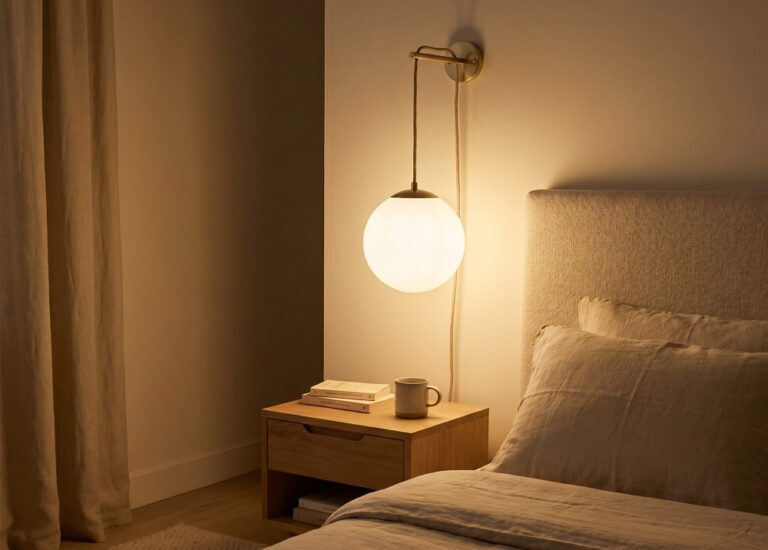
Wabi-Sabi Lamp : Creating Soft Lighting for a Serene Interior
There are interiors where light does more than just illuminate—it soothes. With a wabi-sabi lamp, this soft light becomes the centerpiece of the decor. This
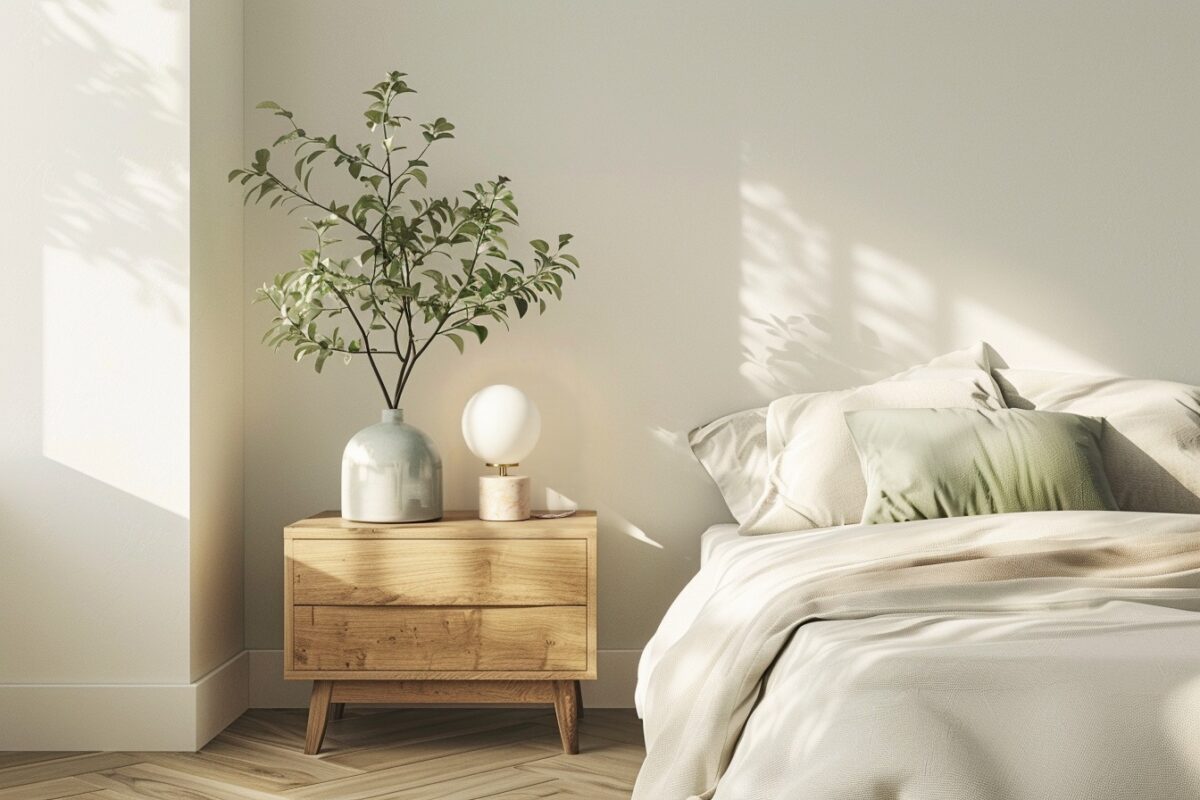
The bedroom is undoubtedly the most intimate room in the home. It’s where we sleep, rest, read, and sometimes even work — yet bedroom lighting is still too often chosen in a hurry.
So, what lighting should you choose for the bedroom to create a harmonious atmosphere, a warm mood, while keeping everyday lighting functional and comfortable?
Lighting that’s too strong, poorly adapted general lighting, badly placed ceiling fixtures, unsuitable LED bulbs or incorrect color temperature… A poor choice can quickly affect visual comfort and the overall atmosphere of a bedroom.
On the contrary, well-designed lighting — combining soft light, indirect lighting and well-distributed light sources — transforms the bedroom into a true cocoon, perfect for relaxation.
In this article, we guide you step by step to help you choose the right type of lighting, the ideal light intensity, the most suitable fixtures and the best bulbs — so you can optimise your bedroom lighting and create an elegant, soothing and long-lasting atmosphere.
Sommaire
ToggleBedroom lighting should never rely on a single light source or one type of fixture. To create a space that feels comfortable, practical and calming, it’s essential to combine several types of lighting, each with its own role.
Generally, three main categories are used: general lighting, ambient lighting and functional lighting. The balance between these three elements creates a pleasant bedroom from morning to night — and ultimately the best way to light a bedroom.
Your interior lighting design should align with your layout, brightness needs and personal style. Different combinations allow you to achieve various relaxing atmospheres and bring your desired mood to life.
General lighting forms the foundation of bedroom lighting. It illuminates the entire room evenly, without harsh shadows.
Usually provided by a ceiling light or pendant, it should be sufficient but never aggressive. In bedrooms, soft and well-distributed light is preferred, supporting daily activities without disturbing the restful atmosphere. Consider luminous efficiency, ideal color temperature and natural daylight exposure. Whether it’s a master bedroom or a child’s room also influences light color: neutral white, warm artificial light, or the ideal temperature.
Ambient lighting gives the bedroom its character. It provides soft, indirect light that encourages relaxation.
Table lamps, wall sconces and dim light sources help create a warm atmosphere — perfect for calm evenings or reading moments. This type of lighting transforms a simple bedroom into a true cocoon.
Functional lighting serves specific needs: reading in bed, dressing, occasional work or getting ready.
It’s commonly found in bedside lamps, adjustable wall lights or small table lamps. When thoughtfully planned, it complements general lighting without replacing it, ensuring optimal visual comfort every day.
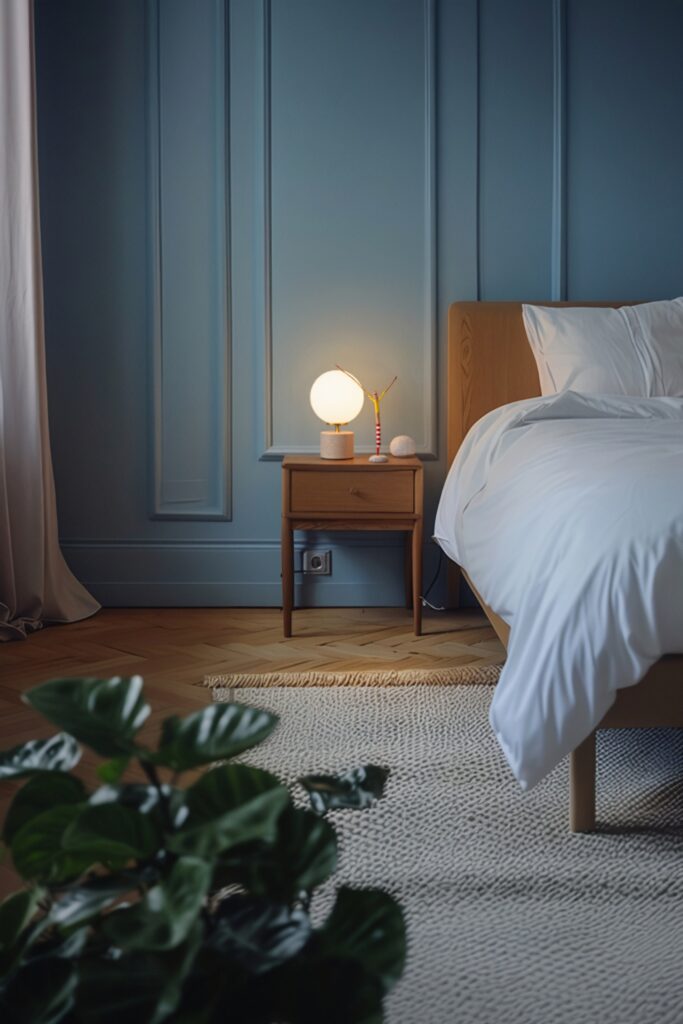
How to create a warm atmosphere in the bedroom?
The bedroom is a place of rest, calm and intimacy. Lighting plays a central role in how we perceive the space and in the emotional feeling we associate with it.
To create a luminous atmosphere, it’s not enough to simply add a lamp: light must be considered as a material in its own right, capable of wrapping the room and supporting moments of relaxation.
Lighting that is too direct or too powerful can quickly disrupt the atmosphere of a bedroom. On the contrary, indirect lighting diffuses light more subtly, without glare.
Table lamps, wall sconces aimed at the wall or ceiling, and light sources placed at mid-height help create enveloping light, similar to candlelight or a sunset glow.
This type of lighting soothes the eyes and naturally invites rest.
Color temperature directly influences the mood of a room. In a bedroom, warm light is preferred, generally between 2700K and 3000K.
These slightly golden tones create an immediate sense of comfort, encourage relaxation and respect the body’s natural rhythm.
On the other hand, overly white or cool lighting should be reserved for functional spaces, as it stimulates alertness and can interfere with falling asleep.
A warm bedroom relies on a subtle balance: controlled intensity, warm light and multiple light sources.
By varying lighting points and avoiding a single dominant central source, you create a soft and reassuring atmosphere — ideal for slowing down and reconnecting.
Light then becomes a comfort element in its own right, just like materials, colours or furniture. It supports quiet evening moments and turns the bedroom into a true refuge.
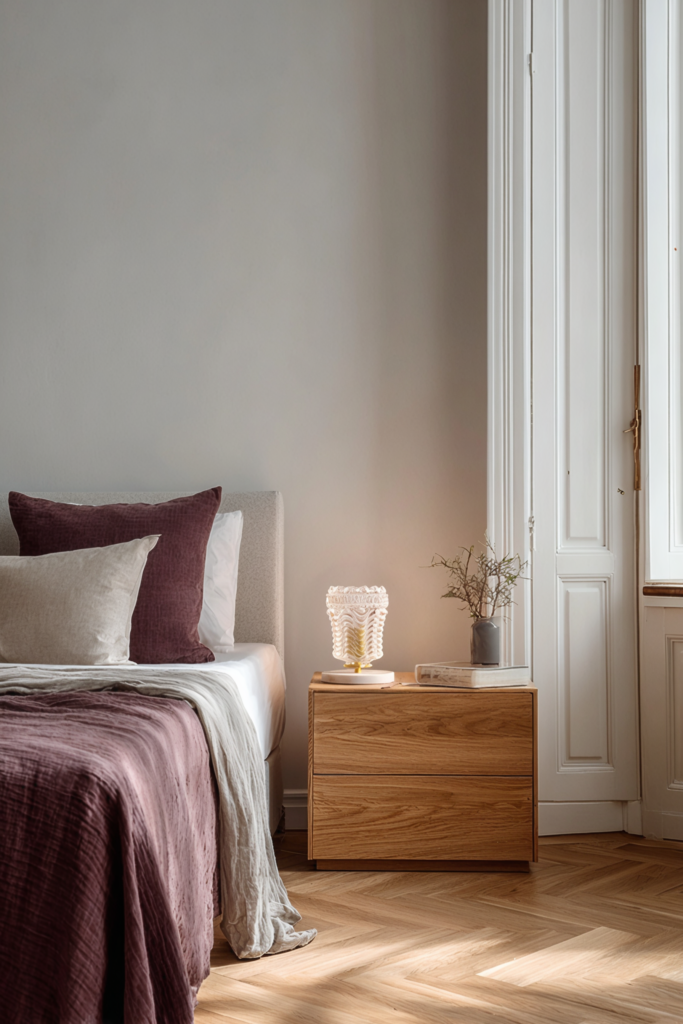
Light intensity is essential for visual comfort. Too low strains the eyes; too strong creates a cold, restless atmosphere. The right balance depends on room size, usage and time of day.
With LED bulbs, lumens — not watts — measure actual brightness.
Generally, bedrooms need around 100–150 lumens per m² for main lighting, providing effective illumination while keeping a soft mood.
Secondary lighting (bedside lamps, wall lights, ambient lamps) should be gentler, designed to support reading or relaxation.
The most common mistake is choosing lighting that’s too powerful or too white.
An overly bright ceiling light combined with cool color temperature can make the space feel impersonal and uncomfortable. Another frequent error is multiplying strong light sources without hierarchy, resulting in flat lighting that tires the eyes.
It’s better to use several moderate light points rather than one dominant source.
Often underestimated, dimmers are a real asset in bedrooms.
They allow brightness to adapt throughout the day: brighter in the morning, softer in the evening.
A single fixture can serve multiple purposes without compromising atmosphere — a simple, elegant way to personalise lighting while extending LED bulb lifespan.
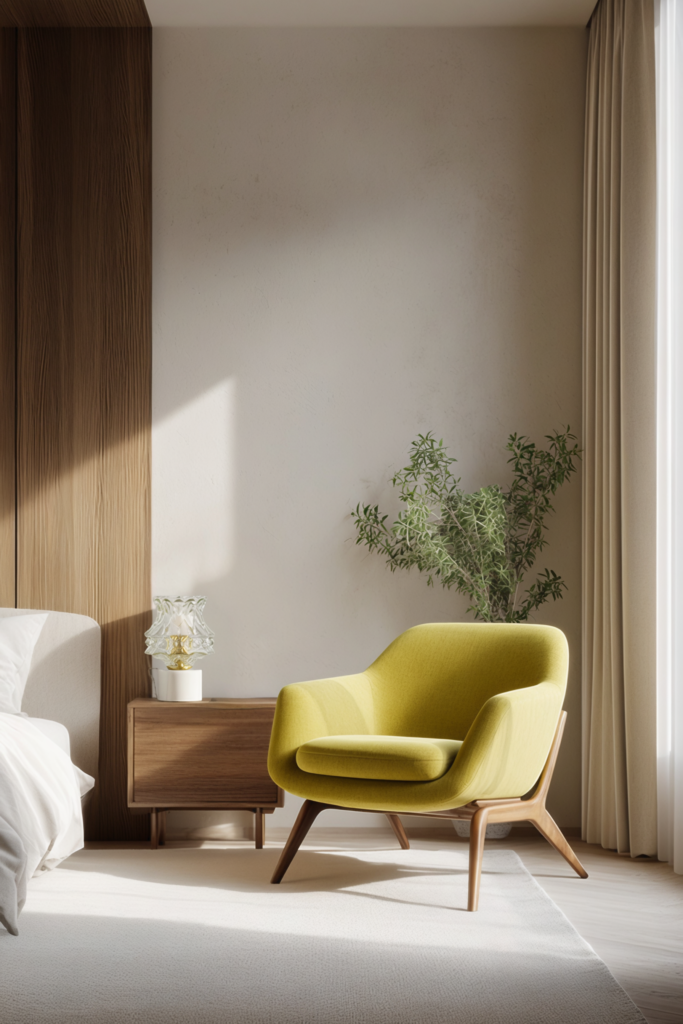
In a small bedroom, lighting plays an essential role. When thoughtfully designed, it not only improves visual comfort but also creates a sense of space and lightness. Bedroom lighting should also adapt to daily activities and the natural light throughout the day.
Rather than relying on a single light source, it’s best to adopt a more subtle approach by playing with light distribution and softness.
In a compact space, a powerful central light can flatten volumes.
The key is to multiply light points: a bedside lamp, a wall sconce, a small ambient lamp… Each source helps structure the space without weighing it down.
This combination creates a more balanced and enveloping light, ideal for a bedroom. It also allows you to adapt lighting to different moments of the day, without ever overwhelming the room.
In a small bedroom, the choice of lighting fixtures is just as important as their placement.
Opt for visually light designs with clean lines that don’t clutter the space. Wall sconces or discreet pendant lights are particularly suitable, as they free up floor and surface space.
A well-positioned fixture — at reading height or slightly offset from the bed — improves comfort while enhancing the feeling of flow in the room. Decorative bulbs can also be an option, but they remain a partial solution.
Light can become a powerful tool to visually enlarge a bedroom.
Lighting directed toward walls or ceilings creates indirect light that stretches volumes and softens corners. Light-coloured surfaces combined with well-distributed light sources amplify this effect.
Finally, avoiding strong contrasts and oversized fixtures helps maintain a harmonious atmosphere. Soft, well-balanced lighting gives the bedroom a sense of openness and serenity — even when square metres are limited.
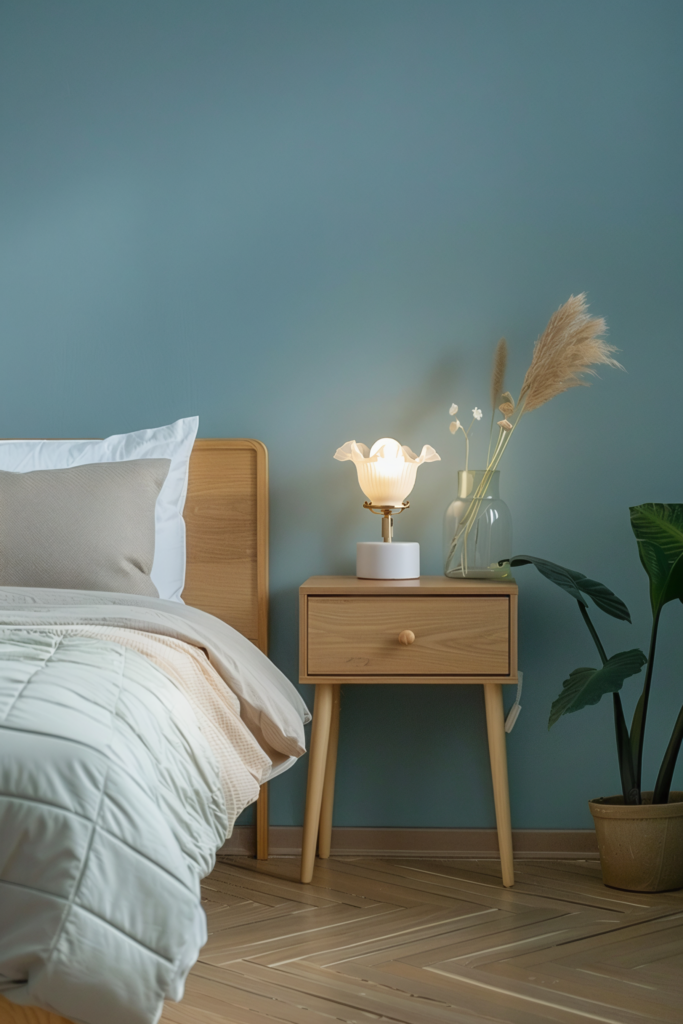
Choosing the right bulbs is just as important as selecting the lighting fixtures themselves. Even the most beautiful lamp can lose all its visual comfort if fitted with the wrong bulb.
In a bedroom, LED bulbs are now the best option: economical, long-lasting, and available in a wide range of colour temperatures and light intensities.
For bedroom lighting, visual comfort comes first. Warm LED bulbs with a colour temperature between 2,700 K and 3,000 K are recommended.
This slightly golden tone creates a soothing atmosphere, ideal for relaxation and rest.
In terms of brightness, it’s best to choose non-glare bulbs, especially for bedside lamps or wall sconces. Light that is too direct quickly strains the eyes, while soft diffusion encourages a calming and enveloping ambience.
LED bulbs may represent a slightly higher initial investment, but they quickly pay for themselves over time.
On average, a quality LED bulb lasts between 15,000 and 25,000 hours, meaning several years of use in a bedroom.
Price-wise, suitable LED bulbs for bedrooms can now be found from just a few euros, depending on wattage, light quality and options (dimmable, opal diffusion, decorative filament). The base price depends on the result you’re looking for — think long-term savings.
Over time, LEDs consume far less energy than traditional bulbs, making them both an economical and responsible choice.
One common mistake is focusing only on watts. With LEDs, it’s important to think in lumens, which indicate the actual amount of light produced.
For example, a 6–8 watt LED bulb can provide lighting equivalent to a traditional 40–60 watt bulb.
Another frequent error is choosing light that’s too white or too powerful for a bedroom. These tones, often above 4,000 K, are better suited to workspaces than relaxation areas.
Finally, if you use a dimmer, always check bulb compatibility to avoid flickering or visual discomfort.
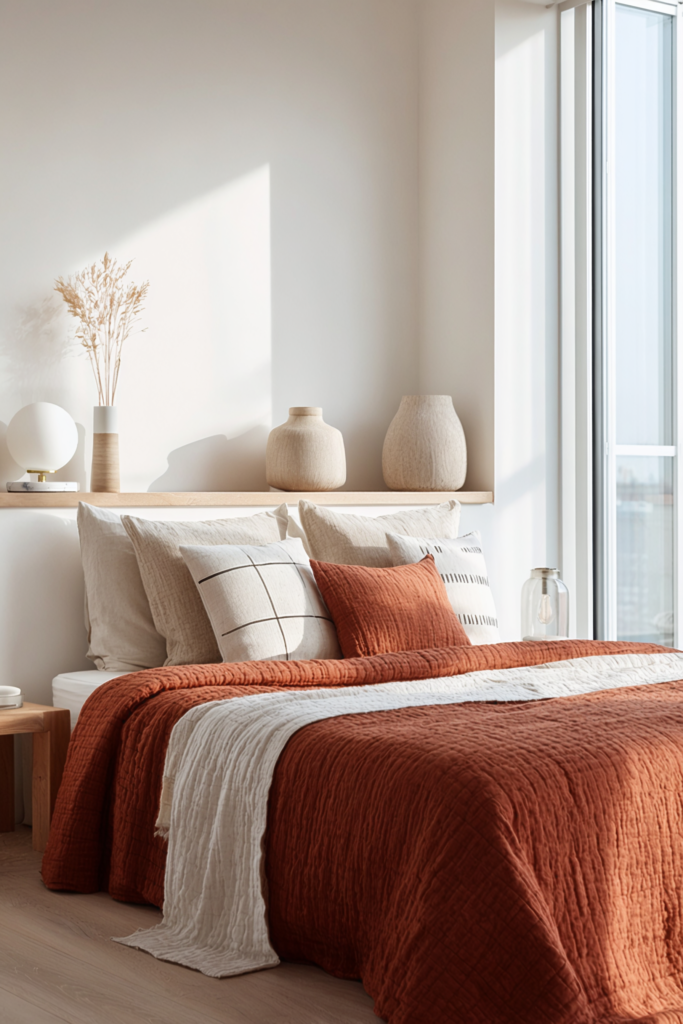
Choosing the right lighting fixtures is key to creating successful bedroom lighting. Each light source should serve a specific purpose while blending harmoniously into the space. Natural light remains a valuable starting point, to be thoughtfully complemented.
By combining functionality, aesthetics and visual coherence, you create a bedroom that feels both comfortable and elegant.
Bedside lamps are essential in a bedroom. They provide functional lighting for reading or relaxing moments, while fully contributing to the overall atmosphere.
Placed on either side of the bed, they create balanced and reassuring light — perfect at the end of the day.
Beyond their practical role, bedside lamps are also true decorative pieces. A vintage-style model made with noble materials such as marble, brass or opaline glass instantly adds character to the room.
It’s often the light fixture you look at the most — so it might as well be beautiful, soft and durable.
Decor tip: choose a lamp that diffuses soft, gentle light, pleasant for the eyes and low enough to avoid glare when lying down.
Wall sconces are an excellent alternative to bedside lamps, especially in bedrooms where space is limited.
Mounted on the wall, they free up bedside tables while providing precise and comfortable lighting.
They’re particularly appreciated for their discreet elegance and their ability to visually structure the space around the bed. Adjustable or indirect-light models create a soft ambience while remaining functional.
In a carefully styled bedroom, wall sconces add a refined architectural touch without overwhelming the decor.
The main light sets the tone for the bedroom. It should be efficient enough to illuminate the entire room while remaining subtle and non-aggressive.
A ceiling light works perfectly in low-ceiling bedrooms or minimalist spaces, where evenly distributed light is preferred.
A pendant light, on the other hand, adds more personality. It becomes a true decorative element, especially when chosen with warm materials and soft light diffusion.
In bedrooms, opt for simple shapes and filtered light to preserve the intimate atmosphere of the space.
Essential tip: whatever main fixture you choose, always complement it with secondary lighting to avoid flat, uniform light and create a truly welcoming ambience.
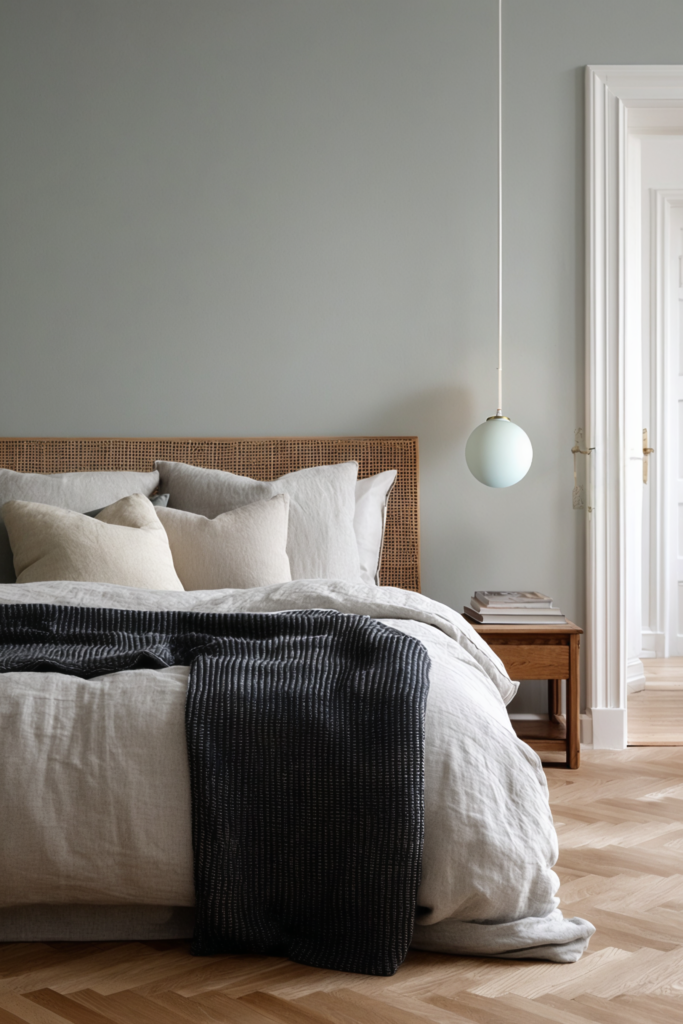
Ultimately, which lighting should you choose for your bedroom?
Choosing the right bedroom lighting is above all about finding the perfect balance between comfort, functionality and atmosphere. It’s not about a single fixture, but about a coherent combination of light sources designed to support every moment of the day.
Successful bedroom lighting relies on three essential pillars:
– soft general lighting, to illuminate the room without being harsh,
– ambient lighting, warm and indirect, to create a soothing atmosphere,
– functional lighting, precise and well placed, for everyday activities such as reading or getting dressed.
By favouring warm light tones, controlled brightness and fixtures adapted to the space, the bedroom becomes a true refuge. Light follows natural rhythms, encourages relaxation and enhances the decor.
Finally, beyond technical considerations, lighting is also a matter of style. Carefully chosen fixtures, crafted from noble materials and timeless lines, add character and transform the bedroom into a personal, harmonious and lasting space.
Well-designed lighting doesn’t always draw attention — but you feel it, every evening, the moment the lights turn on.
Discover our collection of timeless lamps
There are interiors where light does more than just illuminate—it soothes. With a wabi-sabi lamp, this soft light becomes the centerpiece of the decor. This
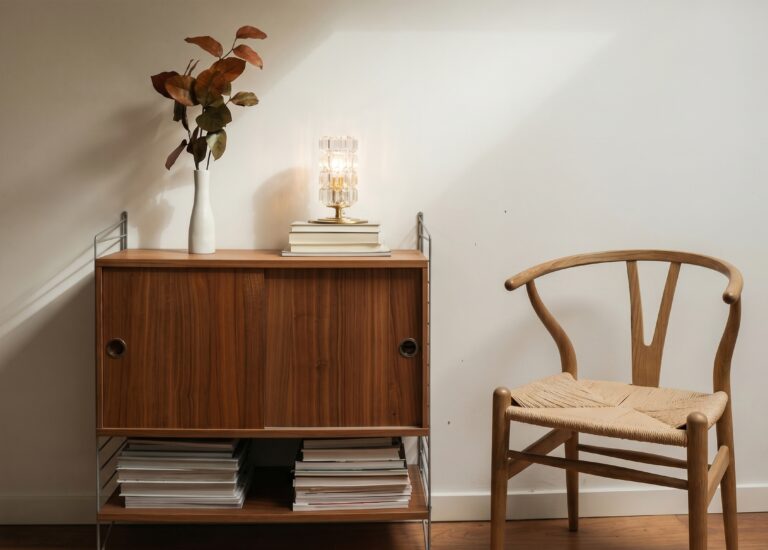
Vintage or retro? These two terms appear in every home decor magazine, adorn the windows of flea markets, and feature prominently on interior design websites.
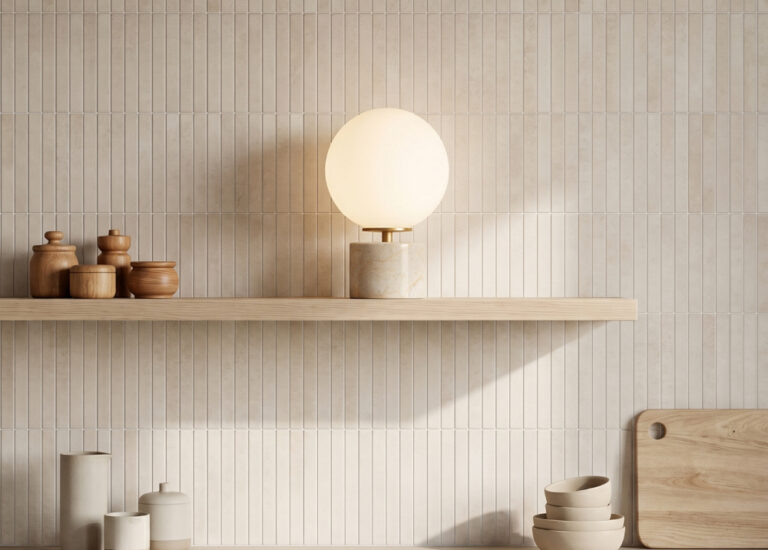
Kitchen lighting is never just a minor detail. As the heart of your home, your kitchen is where you prepare meals in the morning, enjoy