
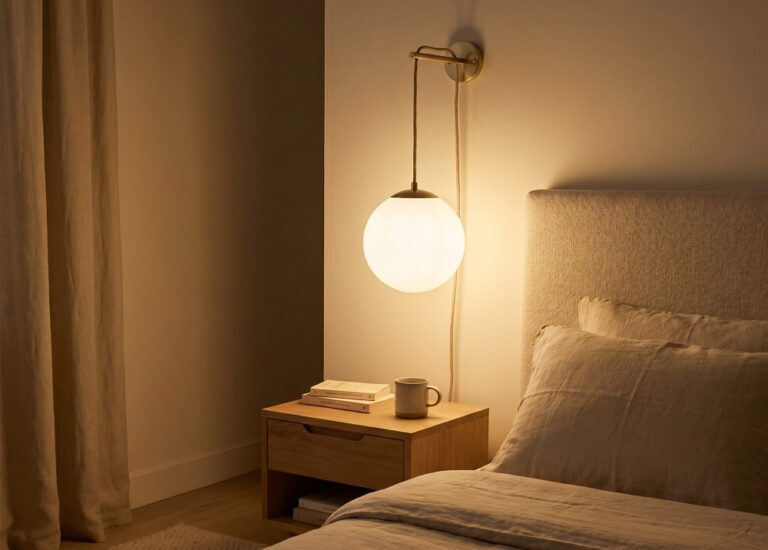
Wabi-Sabi Lamp : Creating Soft Lighting for a Serene Interior
There are interiors where light does more than just illuminate—it soothes. With a wabi-sabi lamp, this soft light becomes the centerpiece of the decor. This

Kitchen lighting is never just a minor detail. As the heart of your home, your kitchen is where you prepare meals in the morning, enjoy family dinners in the evening, and sometimes even find a spot to read at any time of day. Choosing the right type of lighting for a kitchen means thinking of light as a true design element: it defines spaces, enhances materials, and creates a unique atmosphere in your home. Between ceiling lights, pendant lights, chandeliers, floor lamps, wall sconces, recessed LED spotlights, and table lamps, how do you make sense of it all? Which bulb should you choose, what color temperature should you use, and how do you combine task lighting with ambient lighting? This comprehensive guide offers our best advice for choosing the ideal lighting for your needs, optimizing the lighting in each space, and finding the right lighting solutions. To successfully light a kitchen, you must consider each area: uniform lighting throughout the room, task lighting above the countertop, and a softer, decorative touch over the dining area.

Sommaire
ToggleProper kitchen lighting is first and foremost a matter of comfort and safety. Whether you’re chopping, plating, cooking, or washing up at the sink, each task requires the right amount of light. Insufficient light strains the eyes, creates dangerous shadows near knives or stovetops, and makes the room less pleasant to be in. Conversely, lighting that is too bright or poorly directed overwhelms the space and creates a clinical atmosphere, which is not conducive to socializing.
Lighting also plays a key decorative role: it is an integral part of the room’s decor and aesthetic. It highlights your furniture, backsplash, kitchen island, or the warm tones of the wood. A designer pendant light above the table, a discreet ceiling fixture, a wall sconce above the countertop, an elegant table lamp on a console table: each light fixture contributes to the atmosphere and defines the style of your interior. Good lighting thus combines functionality and aesthetics to create a warm and inviting ambiance.

The golden rule of kitchen lighting: never rely on a single light source. For a result that is both practical and attractive, combine three complementary types of lighting: functional direct lighting, ambient indirect lighting, and decorative accent lighting.
The first thing to consider is the main light source, which evenly illuminates the entire room. This is typically provided by an LED ceiling fixture, a central pendant light, a designer chandelier, or recessed spotlights. Aim for about 300 lumens per square meter, or 4,500 lumens for a 15-square-meter kitchen. Choosing a powerful yet diffused LED bulb provides even lighting without creating unsightly shadows, ensuring optimal visual comfort at any time of day.
The countertop is the kitchen’s work area—one of the most frequently used spaces in daily life. This is where meals are prepared, ingredients are chopped, and plates are plated. Direct, focused lighting integrated beneath upper cabinets via LED strips or supplemented by recessed spotlights is essential for creating a practical and safe space. It prevents your own shadow from falling on the cutting area. A higher light intensity, around 4000 K (neutral white), ensures optimal lighting and accurate color perception of food. An adjustable wall sconce is another great option above the sink or next to the stove.
This is where the table lamp comes in. Whether placed on the kitchen island, an open shelf, or a console table, it provides that warm, soft light that creates a welcoming atmosphere. An accent light with a decorative touch that transforms the kitchen into a true living space, perfect for cozy dinners or a moment of reading. This article is designed to help you strike the right balance between functional lighting and ambient lighting.

Color temperature, measured in kelvins (K), determines the hue of your light bulb. It is a key factor in creating the right lighting for your kitchen.
For a warm and functional kitchen, opt for a color temperature of 3000 to 4000 K for the main lighting, and a warm white (2700 K) for the table lamp or decorative pendant light above the table.
LED bulbs are now widely recognized as the best lighting solution. These energy-efficient bulbs offer dramatic energy savings (up to 80% less than halogen bulbs), a lifespan of over 25,000 hours, instant on, minimal heat, and simplified installation: LEDs check all the boxes for the kitchen.
Three criteria for choosing the right LED bulbs:
Pro tip: Add a dimmer switch to adjust the light intensity for different times of day. A dimmer switch changes the function of each light fixture, allowing you to use the same lamp for cooking in the morning and creating a soft, cozy atmosphere in the evening.

Often overlooked in kitchens, a table lamp isn’t the main light source, but it creates that warm ambiance that makes all the difference. Placed on a console table, the kitchen island, or a shelf, it casts a soft glow and softens the space. Unlike fixed lighting fixtures (chandeliers, ceiling lights, wall sconces), it can be moved, adjusted, and adapted to the room’s various uses. It complements the general lighting and the work surface without ever replacing them.
At Alfama Chic, our vintage table lamps are hand-restored in our workshop in Lisbon. Each piece is one-of-a-kind: opaline glass globes carefully sourced, paired with bases made of marble, Lioz stone, or brushed brass. They cast a warm, even glow, perfect for dressing up a sideboard or low cabinet, or highlighting a decorative detail in a modern or contemporary kitchen.
Here are a few models that are particularly well-suited for the kitchen, with careful delivery:
For a more personalized project, our custom lighting service allows you to tailor the base, shade, and dimensions to your kitchen and home. This approach is part of our commitment to local and sustainable practices: restoration rather than replacement, handcrafted in Lisbon, and one-of-a-kind pieces designed to last. To discover other decor trends, visit our blog.

On our website, you’ll find our collections of table lamps, pendant lights, and custom lighting fixtures. Our blog shares tips, advice, and real-life examples to help you choose the perfect lighting fixture for your home and your decorating style.
The best lighting combines three sources: general lighting (LED ceiling lights, a central pendant light, or a chandelier), task lighting over the work surface (LED strip lights, recessed spotlights, or adjustable wall sconces), and ambient lighting (a table lamp or a decorative pendant light above the table). Allow for about 300 lumens per square meter.
4000 K is almost always preferable to 6500 K. Neutral white (4000 K) provides balanced lighting that brings out the colors of food while remaining comfortable to be around. 6500 K (cool white) creates an overly clinical atmosphere and strains the eyes over time.
When it comes to lighting, avoid using very cool, bluish white (6000–6500 K) as the main light source. As for the walls, very dark shades absorb light and make the space feel heavy; conversely, white, cream, or beige amplify the effect of natural light and brighten up a dark kitchen.
At the same brightness (in lumens), a cool-white bulb appears brighter because the eye perceives bluish light more easily. However, the actual brightness depends on the luminous flux, measured in lumens, not on the color temperature. For the kitchen, neutral or warm white is preferred, as they are more comfortable.
A table lamp can be placed on the kitchen island, on a side console table, on an open shelf, or in the dining area. It doesn’t replace the kitchen’s main lighting, but serves as accent lighting and a decorative touch to create a warm and cozy atmosphere. Opt for a model with a diffusing opaline globe shade—a perfect choice for social gatherings and intimate dinners for two.
On our website, you’ll find our collections of table lamps, pendant lights, and custom lighting fixtures. Our blog shares tips, advice, and real-life examples to help you choose the perfect lighting fixture for your home and your decorating style.

Discover our collection of timeless lamps
There are interiors where light does more than just illuminate—it soothes. With a wabi-sabi lamp, this soft light becomes the centerpiece of the decor. This
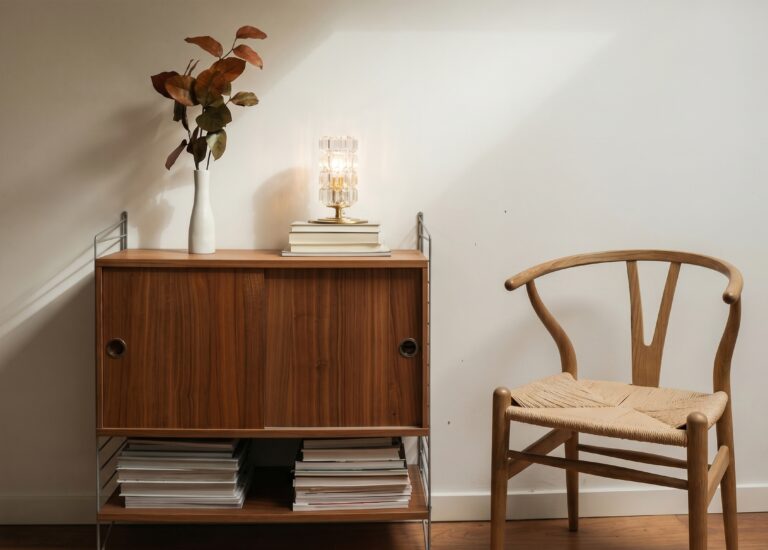
Vintage or retro? These two terms appear in every home decor magazine, adorn the windows of flea markets, and feature prominently on interior design websites.
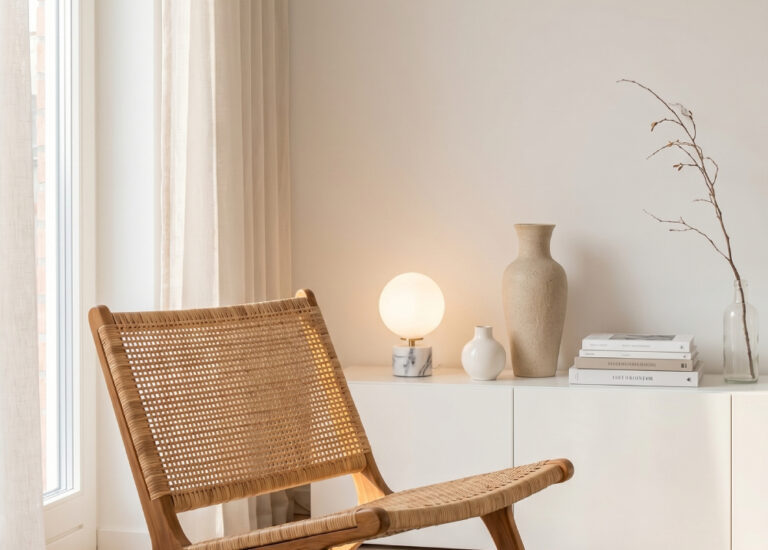
Slow decorating has emerged as an elegant response to an era saturated with objects and fleeting trends. Far from standardized, disposable interiors, it invites us